
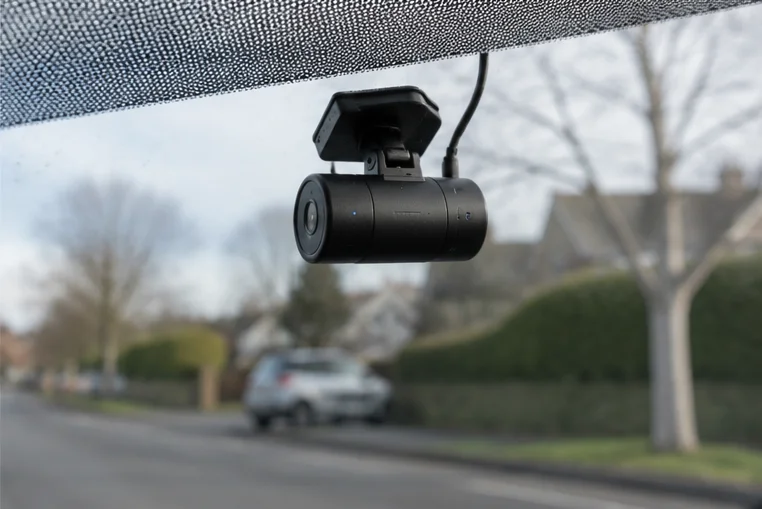
Should You Remove Your Dash Cam During Hot Weather?
Timi
Every summer the same question comes up: should you take your dash cam out of the car, or is it fine to leave it baking behind the glass?
It is a fair worry. People do report cameras dying after hot spells, and a dash cam is not cheap. But taking it in and out every day has its own downsides. Here is how to decide.
The short answer
For most modern cameras on a normal UK summer day, you can leave it in place. Dash cams are built to live in a car and have a temperature limit that shuts them down safely before any damage is done.
The honest answer changes at the extremes. If you are looking at a genuine heatwave, a car parked in full sun all day, and an older or cheaper camera, then removing it, or at least shading it, is the sensible call. The right choice depends on three things: how hot it really gets, how your camera is built, and where you park.
What heat actually does to a dash cam
Understanding the risk helps you judge it:
- Thermal shutdown. The most common effect. The camera switches itself off in the heat to protect its electronics, which means no footage while it is off. This is not damage, but it does leave you unprotected at the worst time.
- Long-term wear. Repeated cooking shortens the life of any electronics. A camera that overheats every day all summer will not last as long as one kept cooler.
- Internal battery risk. This is the real one. Cheaper cameras use a small internal lithium battery, which does not cope well with heat and can swell or fail. Cameras that use a supercapacitor instead are far more heat tolerant, which is why they are the better choice for hot cars.
- SD card damage. Heat corrupts and wears out memory cards faster, so hot spells often bring on card errors as well as shutdowns.
When it is fine to leave it in
You can comfortably leave the camera in place if most of these apply: the weather is warm rather than extreme, you park in shade or a garage, your camera uses a supercapacitor and has a decent operating temperature rating, and you are not running parking mode for hours in direct sun. In those conditions the camera will simply shut down if it ever needs to, and carry on once it cools.
When it is worth taking it out
Lean towards removing it, or shading it heavily, when the risks stack up: a real heatwave, a car left in full sun for the whole day, and especially an older camera or a budget one with an internal battery. In that combination the camera is both most likely to shut down and most likely to suffer for it, so an internal-battery camera is the strongest candidate for coming indoors.
A better middle ground than removing it
Taking the camera out every day is a hassle, and there is a smarter path for most people. Before you resort to removing it, try keeping it cool where it sits: park in shade, mount it high behind the rear-view mirror out of direct sun, shade it with a small strip of tint, and turn parking mode off on the days the car will sit in full sun. These steps solve the problem for the large majority of drivers without the daily faff. We go through them in full in our guide to preventing dash cam overheating.
The catch with removing it
Taking the camera out is not free of downsides:
- It defeats the purpose. A camera in your bag records nothing. Parked cars are where a lot of incidents happen, from car park knocks to attempted theft, so a removed camera leaves a real gap.
- A visible removed mount invites theft. A dangling cable and an obvious camera mount tell a passer-by there is kit worth grabbing. Cracking a window for airflow, which some people suggest for heat, makes that worse.
- You will forget to put it back. The day you leave it at home is the day you need it. Human nature makes the take-it-in-every-day approach unreliable.
Across a fleet, removing cameras is not an option
Everything above assumes one owner with the time and choice to take a camera in and out. Across a fleet that simply does not work. You cannot ask twenty or fifty drivers to remove and refit cameras through a hot spell, and you would lose parked coverage across the whole fleet if you tried.
For a fleet the answer is not removal, it is fitting cameras built to handle the temperature and knowing their status remotely. Proper fleet cameras are rated for a wide operating range, and a connected system tells you the moment one stops recording rather than leaving you to find out after an incident. For taxi and PHV operators, where losing footage can cost you a dispute or your licence, that reliability matters, as we cover in our guide to dash cams for UK PCO operators.
Summary and next steps
For most drivers on a normal warm day, leave the camera in and let it shut down safely if it needs to. Reserve removing it for genuine heatwaves, all-day sun, and older or internal-battery cameras. For everyone else, keeping the camera cool where it sits is the better fix than carrying it around.
For a fleet, removal is not realistic, so the right move is heat-rated cameras and remote visibility of every one. Book a demo to see it in action →