
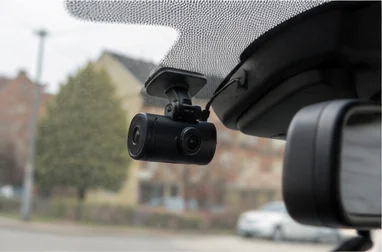
Dash Cam Overheating in Hot Weather? How to Prevent Shutdowns
Charles
If your dash cam keeps cutting out on hot days, it is almost certainly protecting itself, not breaking.
Every dash cam has a temperature limit. Push past it and the camera shuts down on purpose to avoid frying its own electronics. The problem is that this tends to happen on exactly the days you are most likely to need footage, and it can leave you with a camera that looks fine but recorded nothing. Here is why it happens and how to keep it running.
Why your dash cam shuts off in the heat
A car parked in direct sun turns into an oven. Even on a moderate UK summer day the cabin can climb well past 50C behind the glass, and a dash cam mounted right up against the windscreen sits in the hottest part of it. Add the heat the camera generates itself while recording and it can quickly hit the point where it shuts down to protect the chip inside.
This thermal shutdown is a deliberate safety feature, not a fault. The camera would rather stop recording than cook itself. Some cameras will restart once they cool, others sit dead until you intervene, often with a blinking light to tell you something is wrong.
UK heatwaves are becoming more common, and it does not take equatorial temperatures to trigger this. A car left in full sun on a warm afternoon is more than enough.
Parking mode is the worst offender
The single biggest cause of heat shutdowns is parking mode. When you drive, the air conditioning keeps the cabin and the camera relatively cool. Parked, the engine is off, there is no aircon, and the camera is left recording for hours in a sealed car baking in the sun. That is the toughest condition a dash cam ever faces.
If your camera dies specifically while parked in summer, heat is the likely culprit. It is worth reading how parking mode also affects your battery in our guide to running parking mode safely, because the two problems often show up together.
Higher resolution and more cameras run hotter
The more work the camera does, the more heat it makes. A 4K camera runs hotter than a 1080p one, and a two or three channel setup runs hotter than a single lens. Some owners find a camera that copes fine at 1080p starts shutting down once they push it to its highest resolution in summer.
A simple seasonal fix is to drop the recording resolution during the hottest months. You lose a little detail, but a camera recording at 1080p that stays on beats a 4K camera that shut off an hour into your day.
How to keep your dash cam cool
Most heat shutdowns can be prevented with a few practical steps:
- Park in shade where you can. Obvious, but it makes the biggest single difference. Even parking so the windscreen faces away from the sun helps.
- Mount it out of direct sun. Position the camera high up, tucked behind the rear-view mirror, so the mirror shades it. Many windscreens also have a band of small black dots near the top, and mounting on or near that area keeps the camera out of the worst of the sun.
- Keep it off the glass where possible. A camera pressed flat against the windscreen soaks up heat straight from the glass. Some mounts let you sit it slightly away from the screen, which helps it shed heat.
- Add a small shade above the camera. A strip of window tint or a small visor fitted above the lens can shield it from overhead sun. Make sure it does not block the camera’s view or your own, and check UK windscreen rules first, as there are limits on tint and it can come up at MOT time.
- Consider quality ceramic window tint. Ceramic tint across the whole windscreen cuts the heat coming through the glass without making it dark. It slows the cabin heating up rather than stopping it, but it helps the whole car, not just the camera.
- Turn parking mode off in extreme heat. If the car is going to sit in full sun all day, sometimes the safest choice is to let the camera rest while parked rather than have it overheat and shut down anyway.
Heat is also quietly killing your SD card
Overheating does not just shut the camera down. It is hard on the memory card too. Heat is one of the main reasons dash cam cards corrupt and fail early, so if you are getting heat shutdowns you may also start seeing card errors. A proper high endurance card copes far better with high temperatures, which we cover in our guide to dash cam SD card errors.
Why some cameras cope with heat far better
Not all cameras handle heat equally. The biggest technical difference is what stores the camera’s power internally. Cheaper cameras often use a small internal lithium battery, which does not like heat and can fail, swell, or shorten its life in a hot car. Better cameras use a supercapacitor instead, which tolerates high temperatures far more reliably. If you park in the sun a lot, a supercapacitor camera with a decent operating temperature rating is worth the extra outlay. Always check the camera’s stated maximum operating temperature before you buy.
Across a fleet, heat shutdowns are an invisible risk
For one driver, a heat shutdown is an annoyance you can fix with a bit of shade. Across a fleet it is a real exposure. You cannot be fitting tint strips and repositioning cameras across twenty or fifty vehicles, and drivers will not report a camera that quietly switched off. With footage stored on a card in the vehicle, you find out a camera cut out in the heat only when you go looking for an incident that was never recorded.
That is why proper fleet cameras are specified for a wide operating temperature range and, crucially, report their status back to you. A connected setup tells you when a camera has stopped recording instead of leaving you to discover it after the fact, and uploads key footage over 4G so heat on the card does not cost you the evidence. You can see how that works on our connected dash cameras page.
Summary and next steps
A dash cam that cuts out in hot weather is protecting itself, and the fix is to keep it cooler: park in shade, mount it out of direct sun and off the glass, drop the resolution in summer, and use a high endurance card. If you park in full sun for long stretches, a supercapacitor camera rated for high temperatures will hold up best.
For a fleet, the answer is cameras built for the temperature range and a system that tells you the moment one stops recording. Book a demo to see it in action →