
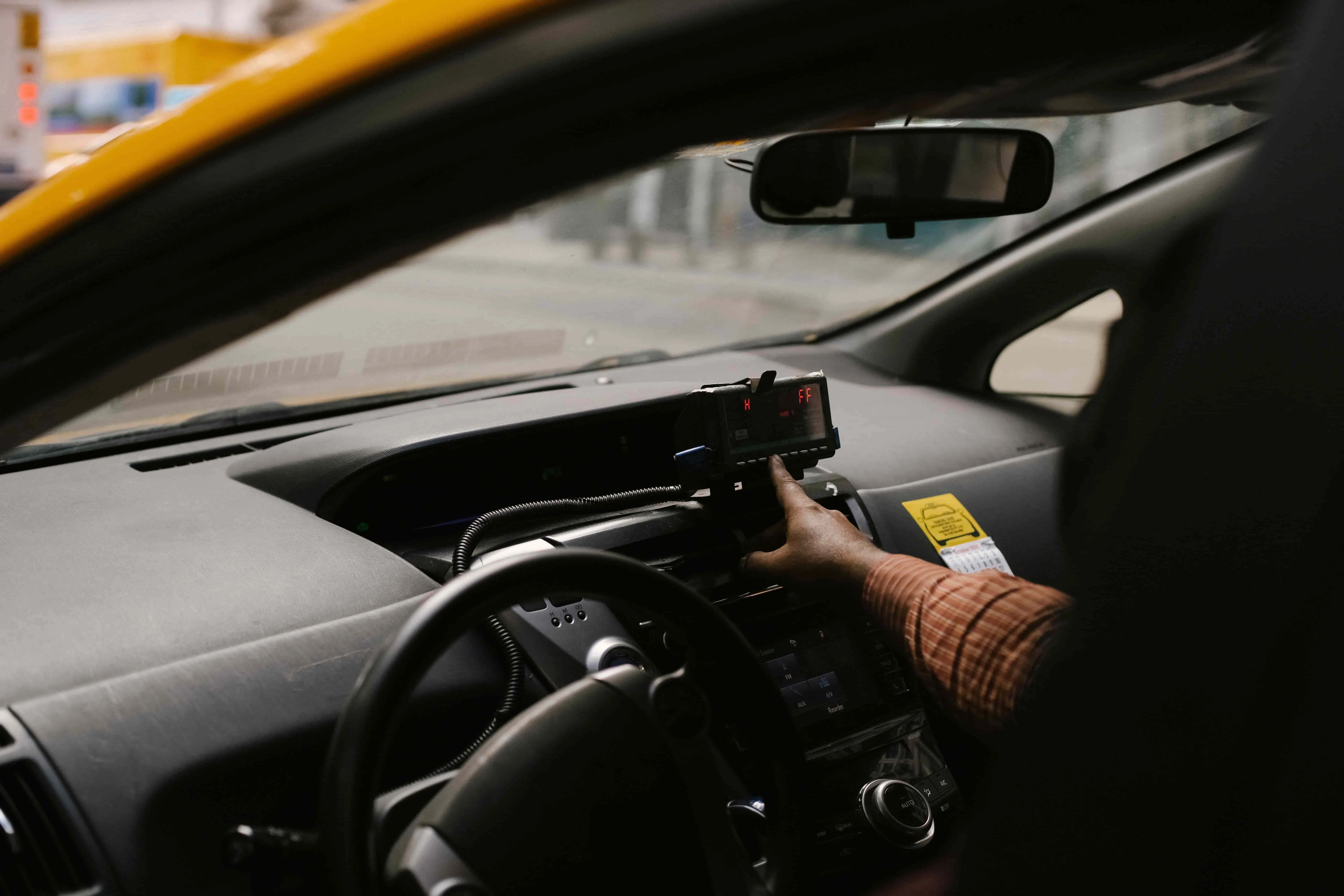
Taxi Dashcam: What UK Operators Need to Know Before a Passenger Makes a Claim
Sheriff Subair
A passenger says you drove dangerously. You know you didn’t. Without a taxi dashcam, it is your word against theirs. In the taxi industry, that is rarely enough.
This guide covers what UK taxi and PCO operators actually need to know: whether you are legally required to have one, what TfL requires if you operate in London, what the rules look like outside the capital, and what your obligations are the moment you install one. Plus the insurance case, the evidence requirements, and what to look for when buying.
Do taxi drivers legally need a dashcam in the UK?
No, not in most parts of the country. There is no national law requiring taxi or private hire drivers to have a dashcam fitted.
But there are exceptions. Several councils in England have made dashcams compulsory, including Rotherham, Southampton, Portsmouth, Cambridge and South Cambridgeshire, Brighton and Hove, Fareham, and Gosport. And the list is growing. What is optional today may not be optional next year.
Even where it is not mandatory, you still need written approval from your local licensing authority before fitting any camera in a licensed vehicle. Manchester City Council, for example, requires prior written consent specifying the number and location of cameras.
One thing is consistent wherever you operate: the moment you install a dashcam in a business vehicle, GDPR applies. You become a data controller, you owe the ICO £52 a year, and you must display clear signage for passengers. More on that below.
TfL dashcam requirements: what London PCO operators must know
If you operate in London, dashcams are not mandatory, but if you choose to install one, TfL’s rules are strict.
As of July 2025, TfL no longer accepts self-installed or consumer dashcams, even if they appear to meet the individual specifications. The system must be on TfL’s official approved supplier list and must be professionally installed. You cannot fit it yourself.
The key rules:
- Recording: 1080p forward-facing camera, 720p interior camera as standard. Systems can include up to four cameras.
- Retention: Footage must be stored for a minimum of 28 days and a maximum of 31 days. After 31 days, automatic overwriting is mandatory unless footage is under active investigation.
- Audio: Continuous audio recording is prohibited. A driver-activated panic button can enable short-burst audio only.
- Tamper alerts: From April 2025, all newly installed systems must include tamper alerts and automatic fault detection. Any failure to record is flagged to the driver or operator immediately.
- Signage: Interior and exterior signage must be clear and legible at all times.
Using a non-approved dashcam while working as a TfL-licensed driver is a compliance breach that puts your licence at risk.
Dashcam rules outside London: what applies to your licence area
Outside London, taxi licensing is handled by each local authority, which means the rules vary significantly depending on where you operate.
Some councils mandate dashcams. Others treat them as optional but still require written approval before you install anything. A few have no specific guidance at all, which still means standard GDPR obligations apply.
If you hold dual licences, for example TfL and a local authority outside London, you must meet the stricter of the two sets of rules when working. The regulatory landscape is also shifting: councils that do not currently mandate dashcams may do so in the near future.
The practical step is simple: contact your licensing authority directly and confirm their current position before you buy anything. If you are unsure who your licensing authority is, your council’s licensing department is the right starting point.
Why taxi operators fit dashcams even where it is not required
Many operators who fit a taxi dashcam are not doing it because a council told them to. They are doing it because they have seen what happens without one.
In August 2025, a London PHV driver was falsely accused by a passenger of reckless driving. He had a TfL-approved two-camera system. The footage showed him driving calmly and responsibly. The audio captured the passenger using threatening language. Uber reviewed the evidence and reinstated his account the same day. Without the footage, that outcome would have been very different.
This is not an isolated incident. There are an estimated 69,500 personal injury claims linked to crash-for-cash scams in the UK every year, according to a UK Parliament Commons Library briefing. In July 2025, Clyde & Co reported that a fraudulent whiplash claim worth more than £74,000 was defeated after dashcam footage showed the alleged collision never happened.
For taxi and PCO operators, the risk is acute. Without footage, a false claim becomes a credibility contest. And that is a contest drivers rarely win.
Does your dashcam footage actually stand up as evidence?
A dashcam that cannot clearly capture what happened is no better than no dashcam at all.
For footage to be useful as evidence, whether for an insurance claim or in court, it needs to meet a few basics:
- HD resolution (1080p minimum): The footage must clearly show licence plates, faces, and road markings.
- Timestamp and metadata: Date, time, speed, and registration number must be visible for court use.
- Interior recording: For passenger disputes, road-facing footage alone is not enough. A two-camera system that covers both the road and the cabin is what actually protects you.
When you report an incident, tell your insurer immediately that you have footage. They will confirm how to submit it.
GDPR and data protection: what taxi operators are responsible for
Installing a dashcam in a business vehicle makes you a data controller under UK GDPR. This applies whether you are a self-employed driver or a fleet operator with 50 vehicles.
Your obligations:
- Register with the ICO and pay the data protection fee. Most self-employed taxi drivers pay £52 a year. The ICO has confirmed this applies specifically to taxi drivers with a dashcam or CCTV in their vehicle.
- Display clear signage. Passengers must be able to see they are being recorded as they enter the vehicle.
- Have a lawful basis. Legitimate interest (protecting your business and drivers) is the standard basis for most taxi operators.
- No continuous audio. Continuous audio recording is a GDPR violation and can also breach your licensing conditions. Violating this risks licence suspension.
- Delete footage when no longer needed. For TfL operators, the maximum retention period is 31 days unless footage is under active investigation.
Fleet operators have an additional layer. You need a written dashcam policy that covers at minimum: why cameras are in use (your lawful basis), which vehicles are fitted, what footage is recorded and stored, who is authorised to access it, how long it is retained, how drivers are notified, and the process for handling a subject access request from a driver or passenger. You must share this policy with every driver in writing before they operate a vehicle with a camera fitted. Footage must not be accessible to drivers while in use.
How a dashcam reduces insurance costs for taxi fleets
The insurance benefit works through four mechanisms: upfront premium discounts, faster claims handling with video evidence, proving you were not at fault, and defeating fraudulent claims before they escalate.
RSA Insurance published a case study in October 2024 showing that a fleet using AI dashcams saw claims frequency drop from 29 percent to 8 percent over 12 months, with average cost per vehicle falling from £1,713 to £423. That was an HGV fleet, but the mechanism is the same for any commercial vehicle operation.
The benefit does not always show up as an immediate upfront discount. For many operators, the larger saving is the premium hike they avoid after a not-at-fault incident they can prove with footage.
Managing dashcams across a multi-driver taxi fleet
For operators running multiple vehicles, the compliance responsibility sits with you, not the individual driver. As the fleet operator, you are the data controller for every camera in every vehicle.
That means you need a written dashcam policy covering what is recorded and why, who can access footage, how long it is retained, and how drivers are informed. When multiple drivers share the same vehicle across shifts, you also need a clear handover procedure. Footage continuity and access controls do not reset between drivers.
Only authorised personnel should have access to footage. Drivers must be informed that recording takes place, but they should not be able to retrieve or delete footage themselves.
With a 4G-connected system, you can review footage from any vehicle remotely. You do not need the vehicle back at base to investigate an incident or respond to a complaint the same day it comes in.
What to look for in a taxi dashcam system
If you operate in London, start with TfL’s approved supplier list. Nothing else is compliant. If you are outside London, check your licensing authority’s requirements first.
Beyond that, the features that matter in a professional system:
- 1080p forward-facing, 720p interior as a minimum. Both channels matter.
- Night vision: essential for evening and night shift operators.
- Tamper alerts and automatic fault detection: mandatory for London from April 2025, good practice everywhere.
- Professional installation: required for TfL compliance, advisable everywhere else.
- 4G connectivity: remote footage access without the vehicle returning to base.
- GPS integration: location data corroborates footage and matters in disputed-location claims.
- Cloud storage: automatic backup so you don’t rely on drivers to hand over an SD card.
How Traknova’s TfL-approved dashcam works for taxi and PCO fleets
Traknova supplies and professionally installs the Hikvision G40, a 3-channel dashcam listed on TfL’s official approved supplier list. Hikvision is one of the most widely deployed camera systems in the UK transport sector. For London PCO operators, that means compliance is handled from day one. No consumer workarounds, no self-installation risk.
The G40 records across three channels simultaneously in full HD 1080p, day and night: forward-facing road footage, interior cabin recording, and a rear-facing channel for full situational coverage. Integrated GPS logs speed and route on every journey. Everything you need to defend a false passenger claim or respond to an insurance notification.
For fleet operators, Traknova connects the G40 to a fleet management dashboard, giving you live footage access from any vehicle without it returning to base, GPS location alongside video, and tamper alerts across every unit. Whether you run 10 vehicles or 250, you manage dashcam compliance from one place, without adding more admin to your day.
The G40 is priced at £299, with professional mobile installation available UK-wide for £90. Traknova’s UK support team is available 24 hours and all systems come with a 12-month warranty.
If you operate outside London, the team can advise on what your licensing authority requires and which setup suits your fleet.
See the Hikvision G40 TfL-approved dashcam or get in touch to talk through your fleet.
Frequently asked questions
Do taxi drivers legally need a dashcam in the UK? No, not in most areas. But several councils have made them mandatory, including Rotherham, Southampton, Portsmouth, Cambridge, and Brighton and Hove. The list is growing. Always confirm with your local licensing authority.
Do I need a TfL-approved dashcam? Only if you operate in London and choose to install one. If you do, it must be on TfL’s official approved supplier list. As of July 2025, consumer and self-installed dashcams are no longer accepted.
Do I need to register with the ICO if I have a dashcam? Yes. The ICO has confirmed that self-employed taxi drivers with a dashcam in their vehicle are required to pay the data protection fee, typically £52 a year.
Can my dashcam record audio? Not continuously. Continuous audio recording is prohibited under both GDPR and most licensing conditions. Some systems include a driver-activated panic button that enables short-burst audio in emergencies only.
How long do I have to keep the footage? A minimum of 28 days. For TfL operators, the maximum is 31 days unless footage is under active investigation, at which point automatic overwriting must be disabled.
Ready to fit a compliant system? See the Hikvision G40 TfL-approved dashcam or speak to the Traknova team about your fleet.