
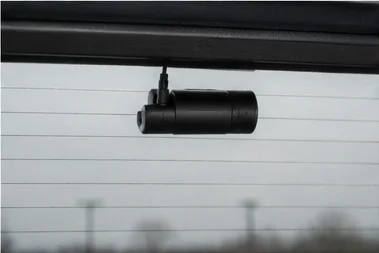
Fleet Dashcam for UK Operators: Protection, Evidence and GDPR
Sheriff Subair
A dispute lands on your desk. A damage claim, a passenger complaint, an insurer asking questions. The only question is whether you can prove it.
For most UK fleet operators running taxis, rental cars, or dealer stock, that question comes without an answer. The footage either does not exist or cannot be retrieved quickly enough to matter. A fleet dashcam is not a consumer convenience. For commercial operators, it is the evidence layer that determines whether a claim resolves in your favour or against you.
Most dashcam guidance in the UK is written for haulage operators, with Traffic Commissioner requirements and Operator Licence compliance at its centre. None of that applies to taxi, PCO, rental, or dealership fleets. This article is for those operators: what a fleet dashcam does for your specific operation, what your GDPR obligations actually look like in practice, and how a connected 4G system produces evidence that holds up when it matters.
What is a fleet dashcam, and how is it different from a consumer dashcam?
A consumer dashcam and a fleet dashcam can look identical, cost similarly, and record at the same resolution. The distinction is not in the hardware — it is in the context. A consumer dashcam is a personal tool for one driver in one vehicle. A fleet dashcam is part of a managed system: footage is automatically tagged with GPS location and speed, accessible to any authorised fleet manager across multiple vehicles without visiting a single one, and the operator using it carries data controller obligations that a personal dashcam user does not. For an operator managing 20 vehicles, that management layer is where the practical difference lives.
There is also a legal distinction that changes the nature of the decision. The moment a business uses cameras in its vehicles, it becomes a data controller under UK GDPR, with ICO registration requirements, footage retention policies, and transparency obligations that a personal dashcam user does not carry. A consumer device was not built to handle those obligations. A fleet-grade system is.
GDPR and data protection: what fleet operators are responsible for
ICO registration is the starting point for any business using cameras in its vehicles. The data protection fee is £52 per year for most small businesses, regardless of whether you are running five vehicles or fifty. This is not a large compliance burden, but it is a mandatory one.
The lawful basis most fleet operators use is Legitimate Interests under Article 6(1)(f) of UK GDPR: the position that recording is justified to protect against crime, fraud, and false claims. The Data (Use and Access) Act 2025 went further, introducing a recognised legitimate interests category for crime-prevention activities that directly applies to outward-facing vehicle cameras. This reduced the formal documentation burden that had previously given some operators pause.
The practical obligations come down to three things. Display clear signage in and on your vehicles so that passengers and other road users know they are being recorded. Keep routine footage for approximately one week, retaining recordings of specific incidents until those matters are fully resolved. Restrict access to authorised personnel only and document who can view footage. For London-licensed taxi and PCO operators, TfL guidance requires audio to be off by default and activated only via a panic button for threatening situations, not recorded continuously throughout the journey.
Dashcam evidence and insurance claims
Once those obligations are handled, the commercial case is straightforward.
The financial case for fleet dashcams is not a guaranteed discount at quote stage. No UK insurer applies an automatic reduction the day you fit a camera. The value is in what happens at renewal: a cleaner claims record and documented non-fault resolutions change the conversation with your broker, and for many fleets that shift in the evidence they can present is where the saving comes from.
Beyond discounts, dashcam footage shortens the claims cycle. GPS-verified, timestamped footage helps an insurer determine liability in days rather than weeks, reducing vehicle downtime and closing claims before they affect the next renewal. That efficiency benefit is separate from the discount and applies regardless of who was at fault.
For staged accidents, the stakes are higher. The City of London Police documented £70 million in fraudulent claims from crash-for-cash schemes between June 2021 and July 2024. The Insurance Fraud Bureau identified over 170,000 suspected staged incidents across 2.7 million motor insurance claims. Operators without footage typically settle these cases because they have no means to contest them, and settled fraudulent claims feed directly into higher premiums at renewal. For a fuller breakdown of how dashcam evidence and GPS tracking affect renewal conversations with insurers, see our guide to reducing fleet insurance costs with tracking and dashcams.
What to look for in a fleet dashcam system
Three specifications determine whether a fleet dashcam works as an evidence tool or just records footage nobody can use.
Resolution: 1080p minimum. Footage used as insurance evidence must capture number plates legibly in all conditions: night driving, direct sunlight, rain. Full HD at 1080p is the standard most insurers expect and the threshold at which number plates are reliably readable. Higher resolution is useful, but 1080p is the specification worth buying to.
Multi-channel recording. A front-facing camera covers road incidents. A rear camera covers following traffic. An interior camera covers the driver and passenger compartment. For taxi, PCO, and rental operators, the interior is where most of the disputes that front-only systems cannot address tend to happen: a passenger complaint about driver behaviour, a customer claiming damage was pre-existing when it was not.
Cloud connectivity. For any fleet running more than a handful of vehicles, a system that requires manual SD card retrieval is not viable when an incident involves multiple vehicles or a vehicle at a remote location. The choice between SD card and 4G-connected recording largely determines whether the system is useful when it matters most.
4G connected dashcams vs SD-card dashcams
SD-card systems record locally, and that creates a straightforward operational problem: if a vehicle is involved in an incident 100 miles away on a Saturday evening, you are not accessing that footage until someone physically retrieves the card. In practice, that means Monday. A 4G-connected dashcam uploads footage automatically after each journey. You access it remotely, within minutes of an incident alert, without visiting the vehicle.
The evidence quality difference is also meaningful. Cloud-uploaded footage is automatically timestamped and GPS-verified at the point of upload by the system. An SD card clip lacks that chain of custody; an opposing solicitor can argue it was edited or misdated. GPS-verified footage with a clear upload timestamp is considerably harder to challenge.
The cost difference is worth framing directly. An SD card system typically costs around £11 per vehicle per month; a connected 4G system runs from roughly £15 to £25. For a 10-vehicle fleet, the additional monthly cost is £40 to £140. A single successfully contested insurance claim, or one avoided fraudulent settlement, covers that gap many times over for most fleets of that size.
Dashcams for taxi and PCO fleets
The connectivity question is universal. The compliance question is not.
Whether a dashcam is a licensing requirement depends entirely on your local licensing authority, not a single national rule. Some councils across England have introduced mandatory camera conditions for private hire vehicles in recent years, with specific technical requirements around storage, installation, and system type. Others have not — dashcams remain voluntary in those areas, used by operators for their own protection rather than to satisfy a licence condition.
In London, Transport for London has introduced specific requirements for licensed taxi and private hire operators, including approved camera systems and minimum technical standards. If you are a London operator, check TfL’s current licensing conditions directly for the specification that applies to your vehicles. If you operate outside London, your local licensing authority’s website or your next licence renewal pack is the right place to start.
For the full compliance picture for taxi and PCO operators, including TfL installation specifications and what to look for in an approved system, see our dedicated taxi dashcam guide.
Dashcams for car rental and dealership fleets
Outside the licensing framework, the dashcam argument shifts from compliance to commercial protection.
The car rental sector’s primary dashcam use case is damage dispute evidence. A vehicle returned with damage the customer denies causing is one of the most common operational friction points in car hire. Pre- and post-rental inspection photographs do not fully resolve it: a determined customer can argue that the damage occurred between those two fixed points. A dashcam recording covering the duration of the rental, supported by GPS data showing where the vehicle went and at what speeds, produces a contemporaneous record that photographs cannot replicate or easily contest.
For dealerships, the equivalent risk sits on the test drive. A vehicle that leaves the forecourt and returns with damage, or does not return, is a significant asset loss with limited recourse if there is no journey record. A camera that records the test drive and uploads to a platform gives the dealer evidence for an insurance claim and location data to act on quickly if a vehicle is not returned.
How dashcams work alongside GPS tracking and immobilisers
GPS tracking and dashcam footage are more useful together than either is alone. A GPS track tells you where a vehicle was and how fast it was travelling at a specific moment. Dashcam footage tells you what happened at that moment. An insurer or solicitor reviewing an incident gets a corroborated timeline: route, speed, and video in one view, each source verifying the other. Either source alone is useful; together they leave significantly less room for a disputed account.
Immobilisers operate at a different layer. Tracking and dashcam footage can locate a vehicle and document what happened after an unauthorised journey begins; an immobiliser prevents that journey from starting at all. Ghost immobilisers and relay immobilisers work at the ignition: the vehicle cannot start without the correct authorisation signal, regardless of whether the keys have been cloned or stolen. For taxi and PCO operators, where keyless relay theft has become a specific and growing threat targeting modern fleet vehicles, this is the security layer that recording and tracking cannot substitute for.
The practical security picture for a fleet is three layers working together: tracking to locate, dashcam to document, immobiliser to prevent.
How Traknova’s 4G dashcam works for UK fleets
Those three layers work best when they run on one platform rather than three.
Traknova’s 4G dashcam uploads footage automatically to a cloud platform after each journey. Each clip is GPS-tagged and timestamped at upload, which means it is ready to use as insurance evidence without any additional processing at the point of claim. For operators managing 20 or more vehicles, that translates to a single view of where every vehicle has been and what happened on every journey, accessible from one login.
The dashcam integrates with Traknova’s GPS tracking system, so when an incident needs investigating, the vehicle’s route, speed data, and video footage are available in the same platform session rather than across separate tools. That combination is what makes each component more practically useful: GPS data provides the verified context for footage, and footage provides the visual confirmation that GPS data alone cannot deliver.
For operators who want the full three-layer security setup, the dashcam sits alongside Traknova’s ghost and relay immobiliser range. All three products are managed through the same platform, removing the operational overhead of running disconnected systems. For UK SME fleet operators who do not need the complexity of an enterprise platform, that consolidation is where the practical day-to-day value sits.
Frequently asked questions
Do I need to register with the ICO if I use dashcams in my fleet? Yes. Any business using cameras in its vehicles is a data controller under UK GDPR and must register with the ICO and pay a data protection fee. For most small businesses, this is £52 per year.
Will a dashcam reduce my insurance premium? No UK insurer applies an automatic discount the day you fit a camera. The benefit comes at renewal, when a cleaner claims record and documented non-fault resolutions give your broker something concrete to present. The size of any saving depends on your existing claims profile and which insurer is pricing your risk.
Do taxi and PCO operators need a dashcam by law? It depends on your local licensing authority. Some councils have introduced mandatory camera conditions for private hire vehicles; others have not. In London, Transport for London has specific requirements for licensed operators. Check your local authority’s current licensing conditions directly rather than assuming either way.
How long should I keep footage? Around one week for routine recordings. Retain footage from a specific incident until that matter is fully resolved.
Can I use interior cameras in my vehicles? Yes, with clear signage in and on the vehicle. Audio should be off by default. For London-licensed taxi and PCO operators, TfL guidance requires audio to be activated by a panic button for threatening situations only, not recorded continuously throughout the journey.
The real question for most UK fleet operators is not whether to run dashcams. It is whether the system currently in place would actually hold up when it matters: a claim that needs contesting, a dispute that needs evidence, a licence condition that needs meeting. A 4G-connected setup that integrates dashcam footage with GPS tracking and works alongside immobiliser security is not a complicated investment to justify. The cost of settling claims you should not be losing is considerably higher.
See how Traknova’s 4G dashcam works for your fleet, or book a free consultation.