
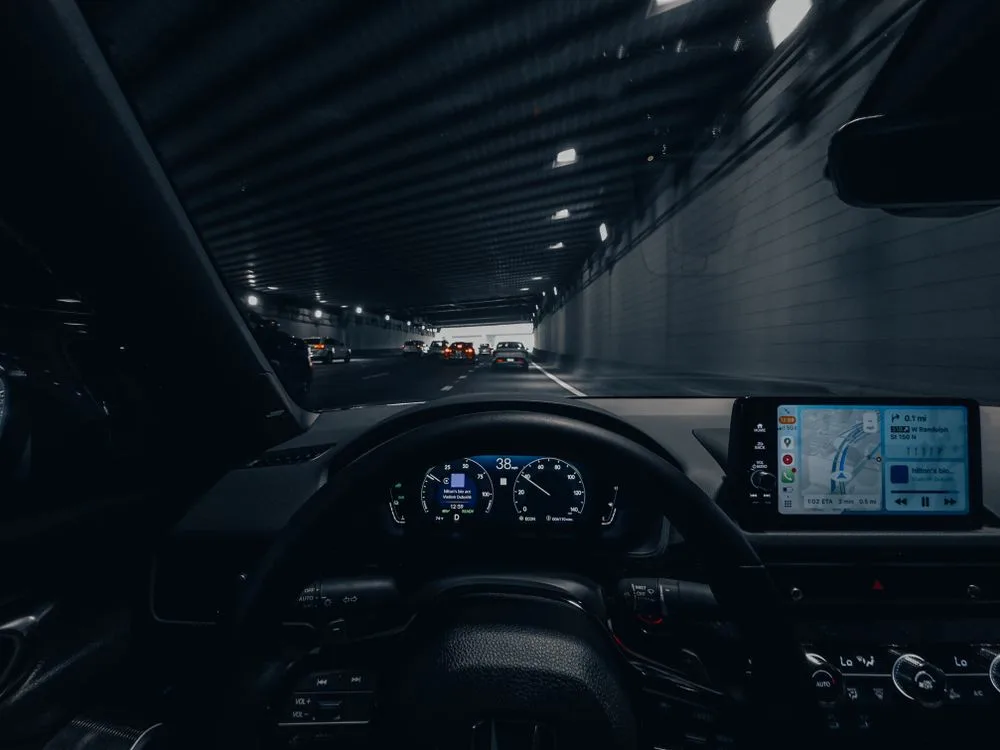
Why Does TfL Make You Use an Approved Dash Cam? The Real Reason
Timi
Most PCO drivers hit the TfL dash cam rule the same way: they buy a decent camera, then find out they can’t use it.
First, TfL doesn’t force you to have one
There is no TfL rule that says you must fit a dash cam to a private hire vehicle. Fitting a camera is your choice, and plenty of drivers work without one.
What TfL does control is which camera you fit. Once you decide to install one, it has to be a system on TfL’s approved list, approved for private hire vehicles specifically.
That’s the bit that frustrates drivers. It feels like a rule designed to make you spend more. It isn’t, but the reasons aren’t obvious until you look at what a camera in a PCO car actually does.
To TfL, your dash cam is CCTV
You think of it as a dash cam. TfL thinks of it as in-vehicle CCTV.
TfL’s CCTV guidelines cover any recording device fitted inside the vehicle that can capture images, whether it’s pointing at the road or at the passengers. A forward-facing dash cam fits that description. So the rules that apply to cabin cameras also apply to the camera watching the road.
Once you see it that way, the rule makes more sense. TfL isn’t regulating a gadget. It’s regulating a recording system that captures members of the public, inside a licensed vehicle, every working day.
Reason 1: You’re recording passengers
A PCO car is a workplace with strangers inside it. Footage of those passengers is personal data, and in a licensed vehicle it’s also footage of vulnerable people at times: people travelling alone, late at night, sometimes drunk or unwell.
TfL wants to know that any system recording them handles that data properly. That’s why its rules go well beyond “does the camera work”.
Footage must be secure
Recordings should be encrypted. The SD card should be secured inside the unit and formatted to it. Footage shouldn’t be copied onto memory sticks or discs for general storage outside the vehicle.
A consumer camera with a pop-out card and no encryption fails this straight away. If the car is stolen or the card goes missing, so does every passenger’s footage.
Footage must delete itself
Recording should overwrite automatically. TfL’s guidelines say images should be kept for a maximum of 28 days. You can keep specific footage longer only for a reason like an insurance claim or a criminal investigation, and you delete it once that’s over.
The ICO goes further for ordinary road footage. If nothing happened, it suggests deleting it after about a week.
Footage requests must be in writing
If the police, an insurer or TfL ask to see footage, the request should come in writing and say why it’s needed. You don’t hand over an SD card at the roadside because someone asks.
These rules protect you as much as the passenger. A clear process means you can’t be accused of misusing footage.
Reason 2: Audio is a step too far
Recording passenger conversations is highly intrusive. TfL’s position is that audio recording is unlikely to be justified except in very exceptional circumstances. It prefers systems without audio at all, and where a system has it, it should be switched off.
There’s one narrow exception: a panic button that starts audio recording when a driver is threatened, with an automatic reset back to normal after a set time.
Most consumer dash cams record audio by default. That alone is a reason TfL doesn’t want unvetted cameras in licensed vehicles.
Reason 3: The camera is a vehicle modification
A camera bolted to the windscreen and wired into the car is a change to a licensed vehicle. TfL cares about how it’s fixed, how it’s wired, and where it sits.
Suction mounts can come loose and become projectiles in a crash. Loose cables can trail into the passenger area. A camera in the wrong place can block the driver’s view or sit where a curtain airbag deploys.
Approved systems are fitted permanently, with fused wiring, to a known standard. That’s why TfL treats fitting a camera as a modification needing approval, not a quick purchase.
Reason 4: Inspections need a clear standard
Your vehicle is inspected before it’s licensed. Examiners need a clear yes or no. An approved list gives them one. “It’s a good camera, I promise” doesn’t.
The list itself isn’t static. TfL updates it several times a year as suppliers are added and removed, and approval is given per vehicle type. A system approved for a black cab isn’t automatically approved for a private hire vehicle.
Is it a money grab?
It can feel like it. Approved systems usually cost more than an off-the-shelf camera, and some suppliers add monthly fees on top.
But the rule is about data protection, passenger safety and vehicle safety. It isn’t tied to any single supplier. What you can control is how much you pay and what you get for it. Some approved cameras come with no monthly subscription at all. We compare the options in our guide to the cheapest TfL approved dash cam.
Frequently asked questions
Is a dash cam mandatory for PCO cars in London?
No. TfL lets private hire vehicle owners choose whether to fit a camera. If you do fit one, it must be TfL approved for PHVs.
Does the approval rule apply to road-facing cameras only?
It applies to both. TfL’s definition of CCTV covers devices recording inside or outside the vehicle, so a forward-facing dash cam is included.
How long can I keep dash cam footage?
TfL’s guidelines set a maximum of 28 days. You can keep specific clips longer only for things like an insurance claim or criminal investigation, then delete them.
Can I record audio in my PCO car?
TfL expects audio to be switched off. The only exception is a panic button system that records audio when you’re under threat and resets automatically.
Who can ask to see my footage?
The police, insurers and TfL can request it. Requests should be in writing and say why disclosure is needed.
Next steps
If you want a camera, pick one already approved for private hire vehicles and get it fitted properly. If you don’t want one, you don’t need one. For more on approved systems, read our TfL approved dash cam FAQ.
See Traknova’s TfL-approved dash cams, from £299 with no monthly fee →